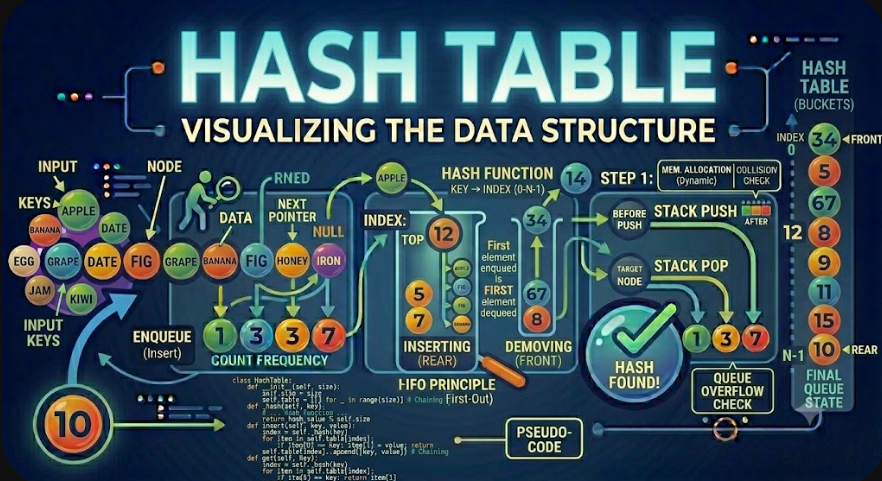
Hash Tables are powerful data structures that store data using keys and hash functions. They are the foundation behind Hash Sets and Hash Maps, enabling fast insertion, lookup, and deletion in average O(1) time.
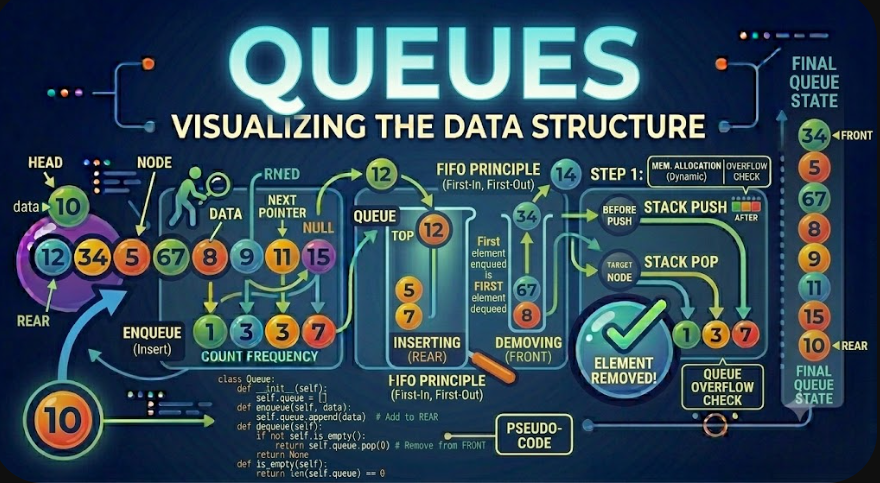
A Queue is a linear data structure that follows the First In, First Out principle, where the first element added is the first element removed.
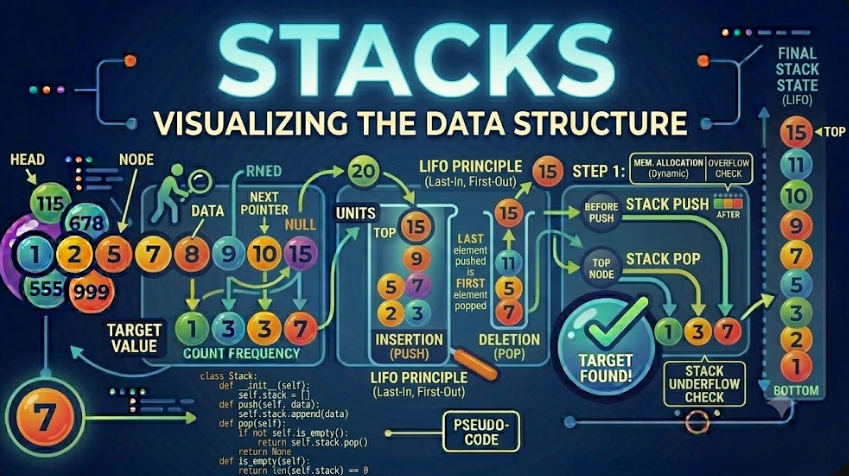
A Stack is a linear data structure that follows the Last In, First Out principle, where the last element added is the first element removed.
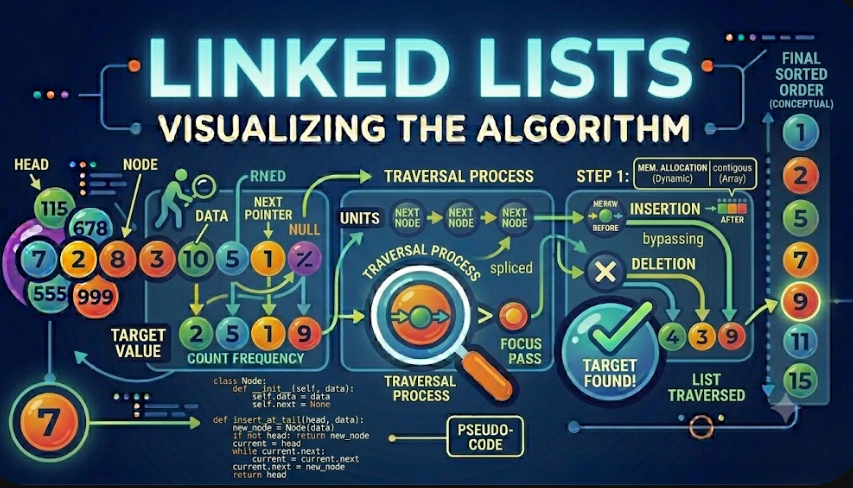
A Linked List is a linear data structure where elements are stored as nodes connected by references. It is useful for dynamic memory, efficient insertions, deletions, and understanding how data structures work internally.
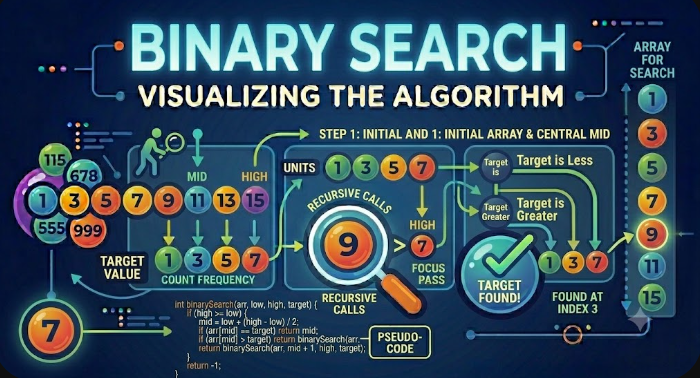
Binary Search is an efficient searching algorithm that finds a target value in a sorted array by repeatedly dividing the search range in half.
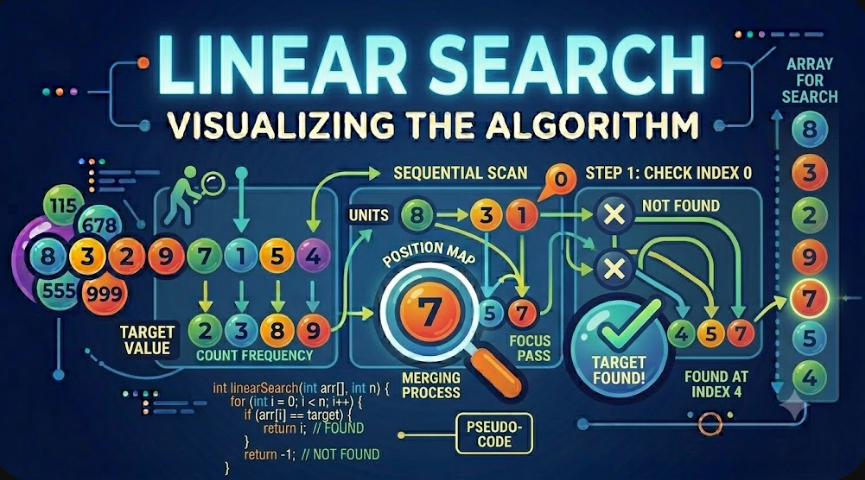
Linear Search is a simple searching algorithm that checks each element one by one until it finds the target value or reaches the end of the array.
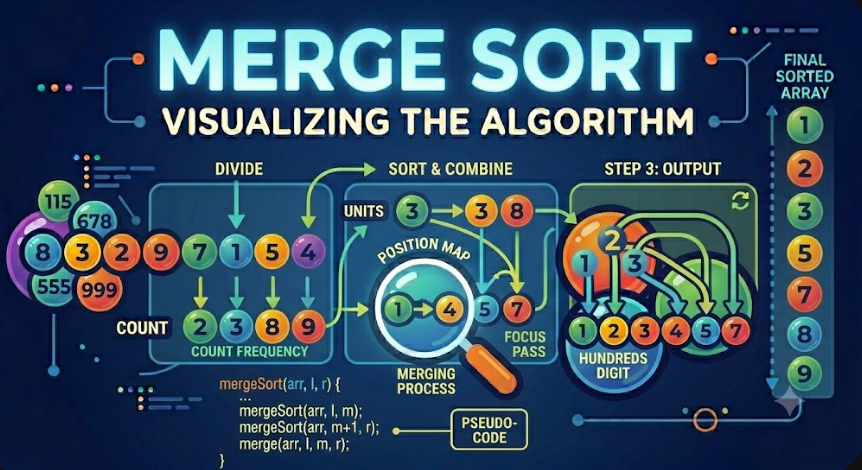
Merge Sort is a stable divide-and-conquer sorting algorithm that splits an array into smaller parts, sorts them recursively, and merges them back in order.
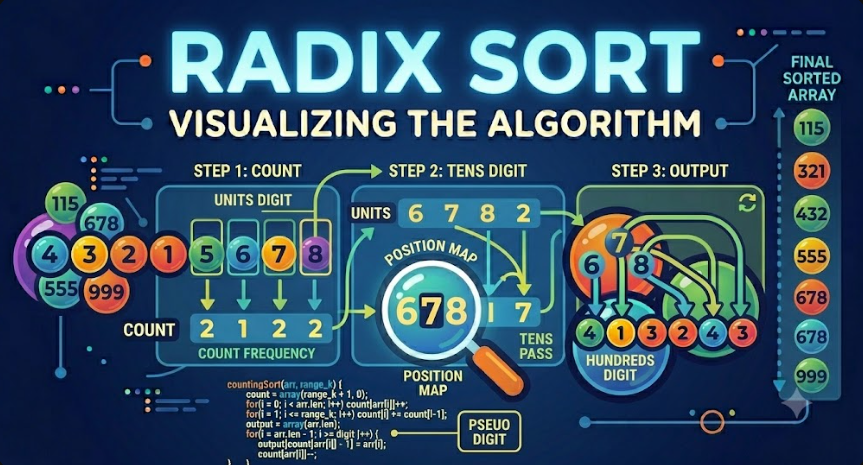
Radix Sort is a non-comparison sorting algorithm that sorts integers digit by digit, usually using a stable sub-sorting algorithm such as Counting Sort.
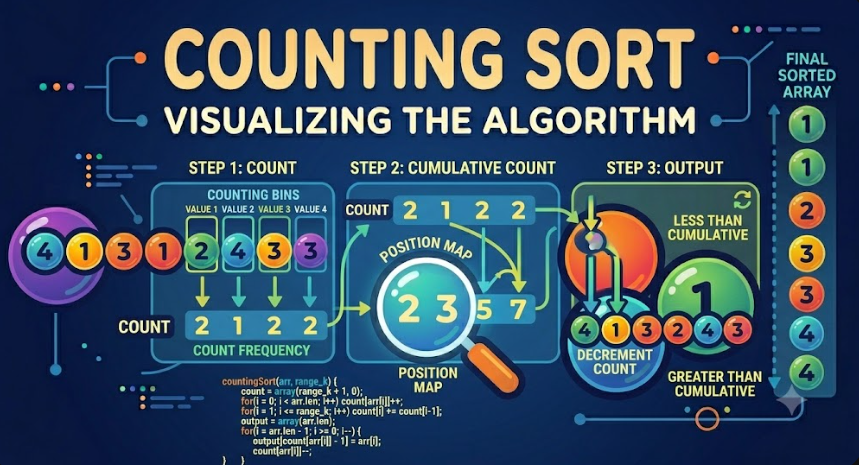
Counting Sort is a non-comparison sorting algorithm that sorts integers by counting how many times each value appears, then rebuilding the sorted array based on those counts.


